

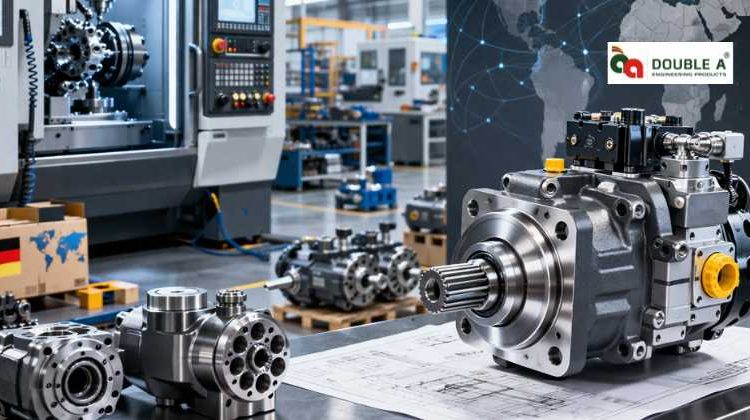
Top Industrial Hydraulic Pump Manufacturer: Premium OEM Solutions for Germany
Germany is the incomparable heart of European engineering. On the one hand, there is the insatiable demand for precision-engineered components in the large automotive facilities in Bavaria, and on the other, of high-technological manufacturing facilities in North Rhine-Westphalia. The best part of this industrial south is the industrial hydraulic pump supplier. Faced with increasing operational expenses and the necessity to re-source their operations into lean supply chains, numerous German industries are considering going beyond the national frontiers and exploring the concept of a global sourcing strategy that will see them default towards high-quality hydraulic pump suppliers in the emerging manufacturing powerhouses such as India. To have the smooth flow of German industrial demand, it is necessary to have a partner that knows the mechanical strictness of the fluid power as well as the logistical precision of the international export.
What is an Industrial Hydraulic Pump?
In the simplest version, the hydraulic system consists of an industrial hydraulic pump as its core. It transforms mechanical energy (usually from an electric motor or an internal combustion engine) into hydro energy. This is done by transferring fluid, which is normally oil, to overcome the pressure due to a load. When it comes to heavy industry, these pumps are the workforce behind such big machines as huge forging presses and the womanly-handling robotic assembly arms.
Types of Hydraulic Pumps
The flow characteristic and level of pressure needed in different applications vary. A company specialized in making a variety of products usually provides:
- Gear Hydraulic Pump: These are one of the simplest and most durable types, whereby a gear is used to pump fluid, and they are used in mobile machinery.
- Piston Hydraulic Pump: This is the gold standard of high-pressure. In this type, we have the axial piston pump (compact and variable displacement), and the radial piston pump (can operate at extreme pressure and high torque).
- Vane hydraulic pump: Famous by the fact that they are quiet and very efficient at medium pressure.
How Hydraulic Pump Systems Work
Hydraulic fluid power systems, which are used today, work on the principle of displacement. The pump rotates to make a vacuum at the inlet that pushes the liquid into the pump. It then forces this liquid to the outlet and into the hydraulic pressure control systems. With control of this pressure, operators are able to travel enormous loads in millimeter accuracy, which is non-negotiable in the German Mittelstand manufacturing.
Applications of Hydraulic Pumps in German Industries
The German economy is diversified, though its strength has been in the heavy-duty sectors, which are largely dependent on fluid power.
- Construction Equipment Hydraulic Pumps: These are used to rebuild the urban infrastructure in Germany with the excavators and cranes.
- Industrial Machinery Hydraulic Pumps: The engines of CNC machines and metal-stamping presses of the German “Fabrik.”
- Hydraulic Pumps used in Manufacturing Plants: Part and parcel of automated conveyor systems and plastic injection molds.
- Hydraulic Mining Industry Pumps: Pumps in the mining industry that are used in tunnel and heavy material movements.
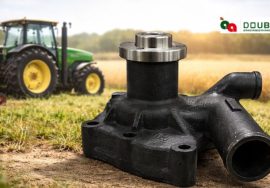
- Agricultural Hydraulic Pumps: This is the hydraulic pump that drives the harvesters and tractors that transform the European farmland.
Why Choose an Indian Industrial Hydraulic Pump Manufacturer?
The alliance between the German engineering needs and the Indian manufacturing strength has increased tremendously. Being the key industrial pump exporter from India to Germany, we offer the way out between cost-efficient and no-compromise quality.
Cost-Effective Manufacturing
Using optimized labor costs as well as large-scale production plants, an Indian exporter of hydraulic pumps can afford to offer much lower prices to the German companies without compromising on the quality of the Grade-A material they would receive in Europe.
OEM & Custom Hydraulic Pump Solutions
There are no two setups of industries that are the same. An actual OEM manufacturer of hydraulic pumps offers custom designs. A small, nimble, hydraulic pump maker can make and refine a design more easily than large, inflexible conglomerates, whether that design requires a particular mounting flange or does not need a particular displacement rate.
Global Export Standards
We are focused on meeting high international standards to compete as a hydraulic pump manufacturer that Europe can rely on. Our products are designed to suit the DIN standard hydraulic pumps specifications, such that it is a drop-in substitute for the already existing German machines.
Key Features of High-Quality Hydraulic Pumps
In sourcing into the German market, there is never enough of good enough. Our four pillars of engineering are:
- High Efficiency Hydraulic Pumps: Reducing energy wastage in the form of heat, which is crucial considering that the energy efficiency law in Europe is very strict.
- Heavy Duty and Precision Engineered: Utilizing heat-treated alloys to provide the heavy-duty hydro pumps with the ability to operate and survive the 24/7 industrial cycles.
- Corrosion Resistance: The use of enhanced coating to develop corrosion-resistant hydraulic pumps that can be used in harsh chemical or even outdoor conditions.
- Longevity: Our long-life hydraulic pump systems are made with a high Mean Time Between Failure (MTBF); minimizing downtime in automated lines.
Types of Hydraulic Pumps Offered by Manufacturers
Based on your fluid media and pressure requirements, we package our products under:
- High-Pressure Hydraulic Pump: When metal forming and heavy-duty lifting are required.
- Hydraulic Oil Pump: Designed to fit lubrication and cooling circuits.
- Hydraulic Power Pump: This is the main hydraulic actuator and cylinder driver.
- Industrial Hydraulic Pumps: An extensive selection of general factory pumps, which are standardized.
How to Choose the Right Hydraulic Pump Supplier for Germany
The choice of a supplier of bulk hydraulic pumps is a strategic choice. When you are a wholesale manufacturer of hydraulic pumps or purchase in bulk by an industry, take into consideration the following angles:
Quality Certifications
Does the supplier hold ISO 9001:2015? In Germany, one need not be afraid of documentation being more important than the hardware itself.
Production Capacity
Does the hydraulic pump OEM vendor have the capability to ramp up to 5,000 units? Make sure that their facility can accommodate your peak demand.
Export Experience
The transportation to Hamburg or Bremen must be experienced regarding the EU customs and VAT, along with maritime logistics. An established Hydraulic pump supplier in Germany will possess a record of delivery on time.
After-Sales Support
There is a need to maintain hydraulic systems. Make sure that the technical documentation is provided in the English/German language, and must possess a responsive engineering team when troubleshooting.
Compliance with German & European Standards
In order to be able to work in the EU, the products should speak the local technical language. This implies that it would be subjected to German hydraulic pump standards, namely the DIN standards of dimensions and fitment. Moreover, the compliance with CE is obligatory, and the equipment is compliant with all the safety, health, and environmental protection requirements of the European Economic Area.
Related Industrial Pump Solutions
In addition to hydraulics, a full manufacturer usually offers a package of fluid handling solutions, which include:
- Centrifugal Pumps for water transport.
- Diaphragm Pumps for volatile chemicals.
- Metering Pumps for precise chemical dosing.
- Pressure Pumps and Slurry Pumps for mining and waste management.
Future Demand for Hydraulic Pumps in Germany
Smart manufacturing and Industry 4.0 are the future of the German industry. There is a huge transition to energy-efficient hydraulic pumps, which can be combined with electronic sensors. With the increasing automation speed in Germany, hydraulic pumps are no longer considered dumb elements; they are being developed to be data-rich assets that will be used to forecast maintenance schedules.
Frequently Asked Questions (FAQ)
1. What kind of hydraulic pumps are the most used in the German industry?
Ans: In the very automated Germany, Piston Hydraulic Pumps (primarily, Axial and Radial) are used in high-pressure accuracy. Nevertheless, External Gear Pumps are still the choice when using them in mobile agricultural and construction machines because of their reliability and affordability.
2. Are your hydraulic pumps DIN and CE certified?
Ans: Yes. Being a world-renowned manufacturer of hydraulic pumps used in industries, all our export models have been designed to meet DIN standards (Deutsches Institut fur Normung) on the fittable and also CE standards on safety and environmental concerns in the European Economic Area.
3. How long is the lead time for shipping from Germany to India?
Ans: The manufacturing lead time is usually 46 weeks in case of normal bulk orders. Major ports such as Hamburg or Bremerhaven can be reached within 2530 days by sea freight, whilst urgent air freight can reach the parts within 710 days.
4. Are you capable of offering tailor-made OEM services to certain equipment?
Ans: Absolutely. As a manufacturer of OEM hydraulic pumps, we focus on doing it to suit your existing or new equipment design by customizing displacement, pressure ratings, mounting flange, and shaft types to fit your German-made or new equipment design.
5. What is the quality of Indian hydraulic pumps compared to European ones?
Ans: Using precision engineering and high-grade materials (such as hardened 8620 steel), the pumps of our company offer a similar service life, usually more than 10,000+ operating hours with proper maintenance at a much more competitive total cost of ownership (TCO).
6. How are high-pressure industrial pumps maintained?
Ans: We suggest that, in order to guarantee the longevity of hydraulic pump systems, fluid analysis, cavitation indicators, and replacement of filters should be conducted in 500-1000 operating hours. We supply our technical manual for full maintenance with each shipment of the export.
Conclusion
It is also important to find a good manufacturer of industrial hydraulic pumps that is aware of the specificities of the German market in order to retain the competitive advantage. We offer hydraulic pump exporters services by creating a blend of the manufacturing agility of India and the quality of Europe, which focuses on precision, durability, and cost-effectiveness. Our engineers are at the ready to fulfill your specifications, whether you need standardized parts or complex OEM systems.