

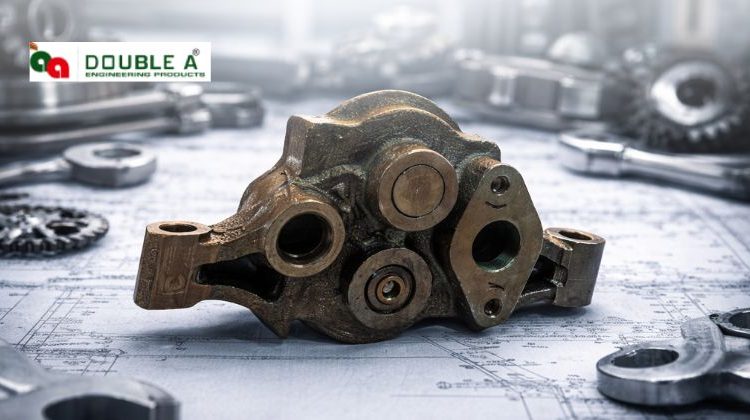
Automotive and Non Automotive Oil Pumps Manufacturers: Full Industry Guide
Every mechanical system, be it a top-speed sports car or an oversized power generator, is made up of its lubrication system. The central part of this system is the oil pump. With the trend of global industries moving towards greater efficiency and extended machine life, the place occupied by the automotive and non automotive oil pumps manufacturers has never been as important as it is today.
This is a complete guide to the complex nature of the oil pump manufacturing industry, the different types of pumps, and the importance of using a precisely engineered product to achieve success in the operations.
Introduction to the Oil Pump Manufacturing Industry
Fluid dynamics is critical in the manufacturing industry of the world. In this world, the oil pump is that uncredited hero that makes sure that metal-on-metal contact is reduced by regular lubrication.
The significance of Lubrication Systems
Without an efficient lubrication system, engines and industrial machines would give way to thermal expansion and failure caused by friction in a few minutes. An effective system minimises wear, cools down engine parts, and cleans the inside environment, performing the task of transporting contaminants to the filter.
The use of Oil Pumps in Engines and Machinery
The pressurized circulation is attributed to the oil pump. It pulls the oil out of the reservoir (sump) and pushes it through the gallery of the engine to the bearings, pistons, and camshafts. The pump should be able to sustain certain levels of pressure despite the operating speed, as the leading engine lubrication systems manufacturers will confirm.
Dynamics In Automotive and Industrial Segments
Oil circulation pump manufacturers are in high demand. Although the automotive industry is still a leading force, the development of infrastructure, power generation, and mechanized agriculture has established a huge market of non-automotive industrial pumps.
What Are Oil Pumps? Working & Functionality
An oil pump is a device that works on the principle of pumping oil to move components in order to keep them lubricated. But what is the actual way it works in a high-stakes setting?
- Definition and Purpose: The primary objective of this is to provide a continuous supply of oil of sufficient pressure to have a hydrodynamic film between the moving components.
- Mechanism of Oil Circulation: The majority of pumps are powered by the crankshaft or camshaft. When the pump is rotating, it forms a vacuum that draws oil to the engine block via a pickup tube, and then it is compressed and forced into the block.
- Pressure Regulation: High-quality pumps have an inbuilt pressure relief valve. This is to make sure that when the pressure surpasses a safe value (particularly when starting cold then the extra oil is sprayed back into the sump to avoid seal blowouts.
- Engine Protection Benefits: Internal combustion engine oil pumps smooth the flow, thereby preventing catastrophic engine seizure and assisting in maintaining the thermal balance of the equipment.
Types of Oil Pumps Manufactured
Mechanical designs are different in various applications. The high-pressure oil pump manufacturers usually concentrate on one or more of the following configurations:
1. Gear Oil Pumps
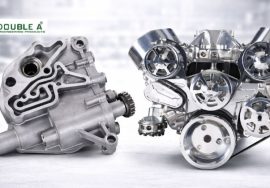
The most widespread one, with two meshing gears that trap the oil and dispose of it through the pump housing. They are also characterized by simplicity and longevity during heavy duty use.
2. Rotary Oil Pumps
These are further referred to as gerotor pumps and have a rotor and an outer rotor. They are very efficient and are commonly employed in present-day passenger vehicle engines.
3. Vane Oil Pumps
These make use of a set of vanes mounted on a rotor that slides in and out of slots. They are also good in the constant flow when the oil viscosity varies with the temperature.
4. Piston Oil Pumps
Piston pumps are used in high-pressure and industrial applications, and they are exceptionally precise and frequently used in non-automotive hydraulic systems of high specialization.
5. High-Flow Oil Pumps
Precision-machined high-flow oil pumps are needed to convey large quantities of lubricant in a short period of time to cool the engine in racing engines or large-scale industrial plants.
Automotive Oil Pump Manufacturer Segment
The automobile sector is the most evident consumer of oil. The manufacturers in this environment are expected to conform to stringent TS16949 or ISO guidelines.
- Passenger Vehicles: The emphasis will be on fuel efficiency and lightweight designs with manufacturers of aluminum oil pump bodies.
- Commercial Vehicles: This type of vehicle is heavy-duty and thus demands pumps that can survive millions of kilometers of usage.
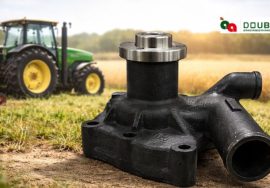
- Tractors and Agricultural Machinery: It is a niche, and the brands like Makhija International have been dealing in rugged OEM automotive oil pump assemblies, which enables them to operate in dusty and heavy-load conditions.
Non-Automotive Industrial Oil Pump Manufacturers
Outside the highway, the pumps are driven by oil to the machinery of the modern world. The manufacturers of industrial oil pumps serve:
- Generators: Supply of 24/7 lubrication of backup power systems.
- Marine Engines: Pumps should be highly resistant to corrosion, and they should be able to cope with the special stresses of the marine environment.
- Construction & Mining: Lubrication and pumping of heavy equipment need to work under the extreme conditions of high temperatures and high-vibration work.
Materials & Manufacturing Technologies
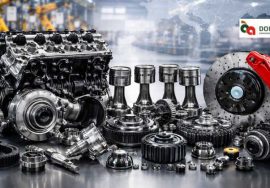
In order to reach the zero-defect level that is demanded by OEMs, the automotive and non automotive oil pumps manufacturers employ superior metallurgy and machining.
- Cast Iron Housings: Cast iron is the best choice because of its high level of strength and wear resistance in high-heat and heavy-duty applications.
- Aluminum Pump Bodies: These are widely used in contemporary vehicles in order to decrease the weight and enhance heat transfer.
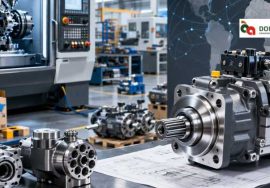
- CNC Machining: The use of CNC machined oil pump components also makes sure that tolerances are maintained to more than microns, which is crucial in maintaining oil pressure.
- Precision Inspection: This involves the use of CMM (Coordinate Measuring Machines) to check all dimensions.
OEM vs. Aftermarket Oil Pump Suppliers
- OEM Production Standards: These are pumps that are manufactured in the specifications of the vehicle manufacturer. They are subjected to the most stringent tests before they are given approval.
- Replacement Market (Aftermarket): The suppliers of oil pumps offer replacement aftermarket products that are affordable to repair. Aftermarket suppliers of high quality usually match or surpass OEM quality to offer alternatives of heavy-duty.
- Private Label Production: Most major manufacturers are also providing services under the label of personal labels, where brands can sell high-quality pumps under their name.
How to Choose the Right Oil Pump Manufacturer
When procuring a fleet or a production line, take into account the following:
- Certifications: ISO has certifications, which are always sought when a manufacturer of oil pumps is needed to ensure that the quality management is standardized.
- Infrastructure: Does the factory contain in-house casting and CNC?
- R&D Capabilities: The fact that a new engine type can be custom-engineered with a pump is a significant competitive advantage.
- Export Knowledge: World oil pump exporters know the international shipping, duty schedules, and climatic conditions in the region.
India as a Hub for Oil Pump Manufacturing
India has become an automotive powerhouse in the world. The manufacturers of Oil pumps in India provide a rare combination of:
- Cost Competitiveness: Effective raw material and labor sourcing.
- Competitive Labor: There is an abundance of fluid-dynamics engineers.
- Export Growth: Indian automotive oil pump exporters are now used to supply large brands in the US, Europe, and Africa.
Future Trends in Oil Pump Manufacturing
The industry is now in the process of a colossal change:
- Electric Oil Pumps (EOPs): With the increased adoption of hybrids and EVs, oil pumps are becoming less mechanical and more electrically operated with motors that have enhanced control.
- Smart Lubrication: It involves systems that can regulate their oil flow depending on sensor information.
- Energy-Efficient Designs: It minimizes the overall engine fuel economy by minimizing the amount of the pump loss, known as the parasitic loss.
Conclusion
The selection of the appropriate automotive and non automotive oil pumps manufacturers is important in maintaining the durability of the engine, the best lubrication, and the longevity of the machineries. High-quality oil pumps are important to passenger cars as well as to heavy industrial machinery to ensure efficiency in operation and to minimize wear.
In case you are seeking high-quality, precisely-machined products, Makhija International Private Limited is a reputable company producing oil-pump assemblies used in cars and industries that are developed using advanced engineering and high-quality standards. Attend Makhija International to know their entire product line, manufacturing, and OEM supply services to meet your business requirements in business.
FAQs
Q1: Which products are manufactured by automotive and non automotive oil pumps manufacturers?
Ans: They manufacture automobile lubrication pumps, generators, marine engines, and industrial machinery.
Q2: Can you tell me the difference between OEM and aftermarket oil pumps?
Ans: OEM pumps are also provided as original production, and the aftermarket pumps are used as spares in repair and maintenance.
Q3: What industries are the users of the industrial oil pumps?
Ans: They are a common type of heavy machinery used in power plants, mining, marine, agriculture, and construction industries.
Q4: What are the materials are used in the manufacture of oil pumps?
Ans: The typical materials used are cast iron due to durability, aluminum alloys due to weight reduction, and CNC-machined steel due to internal parts.
Q5: What is the reason for selecting Indian oil pump manufacturers?
Ans: They offer a middle ground between affordable production, a top quality of export, and sophisticated engineering skills.
Q6: How can the most appropriate oil pump producer be identified?
Ans: Screen their ISO certifications, manufacturing capacity, their on-site testing tools, and track records of providing to international markets.