

Exhaust Manifold: Types, Function, Materials & Common Issues
The exhaust manifold performs the role of the lungs of your car. Being the initial element of the exhaust system, it is very important in the way your engine breathes, performs, and manages heat management. It is important to know whether this heavy-duty part whether you are a car enthusiast who wants to gain performance or a vehicle owner who wants to figure out the cause of a strange ticking sound under the hood.
In this ultimate guide, we discuss the mechanism of the exhaust manifolds, materials, and failure points that are usually influenced, so that you can maintain the optimum engine efficiency and emission regulation.
What Is an Exhaust Manifold?
An exhaust manifold is an engine part that is directly bolted to the cylinder head. Its major function in an internal combustion engine is to gather the burnt exhaust gas of several cylinders and direct the gas into one pipe.
Imagine it is the funnelling system. In the absence of a well-performing manifold, these toxic and high-temperature gases would escape into the engine bay instead of being passed through the catalytic converter and through the tailpipe on a safe note. The connection that exists between the engine and the exhaust system is closed by the manifold, which guarantees the optimal efficiency of the engine and the safety of the cabin against fumes that are potentially dangerous.
How Does an Exhaust Manifold Work?
The functionality of the exhaust manifold involves pressure and temperature control. The following are the steps involved:
- Collection: Once the exhaust valves open during the exhaust stroke of the engine, the hot gases get out of the cylinders at high speed.
- Direction: These gases are received by the manifold, with each having its own “runner” (port), and are combined into a common collector.
- Pressure Regulation: An effective manifold design reduces the back pressure, reducing the engine to gain easier exhalation and inject new air into the engine during the next cycle of combustion.
- Heat Handling: It can withstand very high temperatures (up to 800°C) since it transfers the gases to the catalytic converter to remove toxins and the muffler to reduce noise.
Types of Exhaust Manifolds
It is not just any manifold that is created. The materials and designs used by the manufacturers depend on the use of the vehicle, its cost, and weight.
1. Cast Iron Exhaust Manifold
The cast iron manifolds are applied to most stock passenger cars and heavy-duty trucks.
- Advantages: They have amazing durability and the ability to withstand a lot of heat. They are affordably cheap to produce.
- Disadvantages: They are very heavy and easily heat soak. The ever-growing and shrinking may cause brittle cracks over decades.
2. Stainless Steel exhaust manifold
Modern or mid-range performance cars will commonly have stainless steel.
- Pros: It weighs much less than cast iron, and it is much more resistant to rust and corrosion.
- Cons: It is a little more expensive, and may be harder to weld in case of a repair requirement.
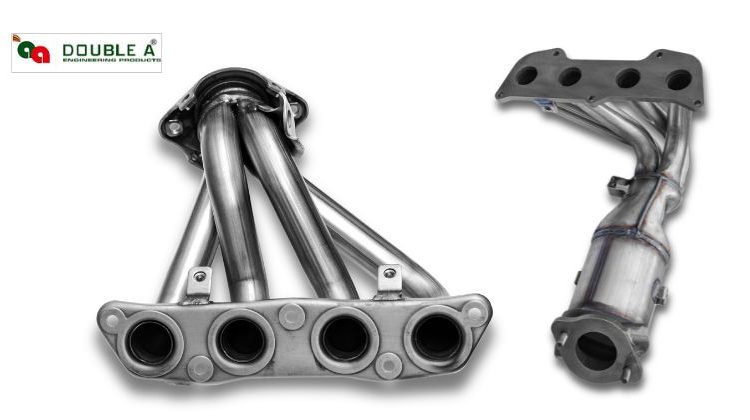
3. Performance Headers
Headers are an exhaust manifold specially made to be power-oriented. Headers have long individual tubes per cylinder, unlike a typical manifold, which combines gases rapidly into a small space.
- Advantages: They lower the backpressure and employ scavenging to draw the exhaust from the cylinders more quickly.
- Best For: Engines that are highly performance-oriented and those that are used in racing, where each horsepower counts.
Components and Materials
The manifold system is composed not of a single metal piece. In order to operate properly, a number of sub-components have to work in harmony:
- Exhaust Manifold Gasket: It is a gasket that is multi-layered and fixed between the cylinder head and the manifold. It avoids high-pressure leakages.
- Flange Connections: these consist of the robust mounting points in which the manifold is attached to the engine and the rest of the exhaust pipe.
- Heat Shields: A variety of manifolds have a metal cover to avoid the high temperature of fusing plastic sensors or wiring.
- Coatings: Expensive manifolds can have ceramic finishes to trap heat within the pipes to enhance the speed of gases and shield the engine bay.
Common Exhaust Manifold Problems
Due to its continuous exposure to the violent change of temperature in the vehicle, the manifold finally becomes worn out.
1. Cracks and Leaks
The most prominent problem is a hairline fracture. The metal expands when hot and contracts when cold, and thus it eventually wears out. Raw exhaust escape is caused by a leak before it enters the catalytic converter.
2. Rust and Corrosion
Stainless steel does not succumb to this, but mild steel and cast iron components do not resist moisture and road salt, and ultimately cause structural failure.
3. Warping
The mounting surface of the manifold may warp because of extreme heat. When it is not perfectly flat, it cannot form a seal, and the gasket will result in constant leaks.
Signs Your Exhaust Manifold Needs Repair
You do not always have to have a mechanic tell you that something is wrong. Watch for these red flags:
Ticking or Tapping Sounds: The engine, which gives a rhythmic clicking sound that fades away as the engine heats up, is a typical indicator of a leak in the manifold. The heating process causes the metal to expand and, in some cases, block the crack temporarily.
- Reduced Fuel Economy: When the leaks occur close to the oxygen sensor, the sensor might give wrong readings, which will result in more fuel being burned than needed.
- Exhaust Fumes in the Cabin: When you get the smell of rotten eggs or heavy gas in the car, then your manifold could be fuming in the HVAC system.
- Check Engine Light: Current vehicles may usually develop a P0420 code or a similar one when leaks in the manifold influence emissions.
How to Fix Common Exhaust Manifold Issues
Repairing a manifold takes time because there is a high chance of rusted bolts.
- Gasket replacement: In case the manifold is not leaking, when you hear that it is leaking, replace the bottom part of the manifold.
- Welding Cracks: Welding nickel rods are special welding rods that can be used to repair a cracked cast iron manifold, but this is a temporary measure.
- Full Replacement: In the case of a warped or highly rusted part, replacement is most cost-effective in the long run.
Exhaust Manifold vs. Headers: Which Is Better?
In the case of a daily driver, a stock manifold is often better as it is quieter, more durable, and more heat-retentive in regard to emissions. But, when you would like more torque and horsepower for your vehicle, then utilize the headers. Headers and top gas exhausts are smoother, but they are noisier, and they may transfer more heat into the engine compartment.
Frequently Asked Questions
Q1. What are the uses of the manifold of a vehicle?
Ans: It gathers exhausts of several cylinders and channels them through one exhaust pipe, as well as serves as a cover on the engine block.
Q2. What is the solution to the problem of an exhaust leak?
Ans: Depending on the seriousness, you can replace the gasket, screw loose bolts, or weld small cracks. Big cracks normally need to be replaced.
Q3. Will you be able to substitute a broken exhaust manifold?
Ans: Yes, by brazing or welding, but cast iron is hard to weld, and as such, these repairs tend to break down as time passes and it expands thermally.
Q4. What is the frequency of inspection of an exhaust manifold?
Ans: It is recommended that it should be checked after every 50,000 miles or when you start hearing or feeling a difference in engine sounds or fuel efficiency.
Maintenance Tips for Longevity
- Never overheat: Overheating of the engine is the greatest manifold killer. Maintain your cooling system.
- Check Hangers: When the exhaust pipe hangers fail, the entire exhaust system will be suspended on the manifold, which in turn will crack.
- Apply Anti-Seize: whenever you are removing the manifold, apply high-temperature anti-seize over the bolts so that they are not easily snapped in the future.
Conclusion
The exhaust manifold plays a critical role in ensuring the engine is powerful, economical, and safe to the environment. Early detection of the leakage symptoms, such as the irritating ticking noise or the loss in MPG, will save you the cost of costly engine repairs in the future. Still on whether to stay with a rough cast iron manifold or to upgrade to a performance header, the most important issues that lead to a healthy exhaust system are proper installation and frequent inspections.
Makhija International presents a brand of exhaust manifolds of high quality that meet high standards. Their decades of experience in manufacturing, combined with the latest technology, guarantee your engine will perform under the most demanding environments.